
Coffee in Ho Chi Minh City costs between 18,000 and 60,000 dong, about $0.70 to $2.33. Both ends are real coffee, made properly. The seven guides on the first page of Google are the same page seven times over, a numbered list of photogenic District 1 cafes. Not one of them prints a price.
So here is the ladder, in dong, with the catch at each rung. We read all 152 Google Maps reviews carrying text across the five listings below, 64 of them written in Vietnamese and 71 in English, and every price here comes from one of them, posted between June and September 2026. Our editorial standards page sets out the method.
What does coffee in Ho Chi Minh City actually cost?
A black coffee at a sock-filter stall is 18,000 dong. A milk coffee at the same stall is 25,000. At the city's oldest cafe it is 30,000. At a specialty bar in District 1 an americano is 60,000.
That is a 3.3x spread inside one city. What you are paying for is mostly the room.
All figures convert at the Vietcombank cash buy rate of 25,740 dong to the dollar on 28 September 2026, published against the reference rate set by the State Bank of Vietnam. Our Vietnam dong to USD guide uses the same basis.
| What you order | Price | The catch |
|---|---|---|
| Black coffee, sock-filter stall | 18,000 VND ($0.70) | Sweetened by default, and heavily |
| Milk coffee, sock-filter stall | 25,000 VND ($0.97) | No wifi, and smoke if you sit inside |
| Milk coffee, 1938 institution | 30,000 VND ($1.17) | Photos may be refused, no women's toilet |
| Americano, specialty cafe | 60,000 VND ($2.33) | Bike parking is extra and not provided |
| Bike parking, District 1 | 10,000 to 20,000 VND ($0.39 to $0.78) | Cash only, paid to a man with a ticket book |
What do locals order?
Five drinks cover almost every order in this city:
- Ca phe sua da. The default. Strong coffee, condensed milk, a glass packed with ice.
- Ca phe den da. The same, without the milk. Ask for this if the sweetness is too much.
- Bac xiu. The milky one, closest to a latte. The gentle way in.
- Ca phe muoi. Salt coffee, a Hue invention. Saigon now has cafes that sell nothing else.
- Egg coffee. A Hanoi drink that Saigon serves anyway. Four five-star English reviews of the Le Loi
specialty bar single it out, one calling it possibly the best in Saigon.
Two phrases are worth memorising. Say "it duong" for less sugar, "khong da" for no ice. At the older shops both are requests rather than settings, so ask before they pour.
If you order "coffee" and nothing else, you will get ca phe sua da, sweet.
Why does the coffee taste different from home?
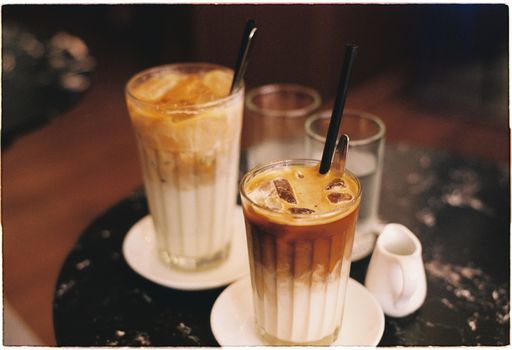
Vietnam grows mostly robusta, not the arabica in most Western cafes. It reads heavier and more bitter, and the condensed milk and the ice grew up around that bean. The sweetness is a pairing, not a cover-up.
This holds at the specialty end too. A five-star Google Maps review, English original, 23 September 2026 says the Dong Khoi bar "uses fine Robusta for its Vietnamese coffee, so it has a much bolder, richer flavour" than a typical Western-style cafe. The good places lean into the bean.
Where does the 18,000 dong coffee come from?
Ca phe vot means sock coffee, literally. The grounds sit in a cloth bag and hot water runs through.
The stall at 330/2 Phan Dinh Phung, in Cau Kieu ward in the old Phu Nhuan district, has done this around the clock for decades. It holds 4.2 stars from 1,546 ratings, and is not a five-star cafe pretending otherwise.
The price comes from a two-star review. A Google Maps review, Vietnamese, translated, posted 11 August 2026, reads: "The upside is the black coffee is cheap, only 18k. The downside, it is so sweet you think you are eating che." Che is a sweet dessert soup.
The person who wrote that did not like the place, and printed the price anyway.
A five-star review from 29 August 2026 gives the other rung: "I bought a milk coffee, 25k, the barista was cheerful and friendly."
Early morning is the other good hour: a five-star review from 23 July 2026 describes older locals stopping in after exercise. Evenings get busy. The outdoor seats are the point, small red chairs facing the traffic.
Not everyone rates it. A one-star review from 22 August 2026 calls it "like watered-down coffee", and a five-star regular from 8 August 2026 admits "the coffee is not what it used to be" and returns for student nostalgia. Go for the method, not the best cup in the city.
These are affiliate links. They never change what we recommend. See our disclosure.
Cheo Leo: the oldest cafe in Saigon, and the reviews nobody translates
Cheo Leo opened in 1938 at 109/36 Nguyen Thien Thuat in Ban Co. It holds 4.4 stars from 1,156 ratings and closes at 18:00.
Sort the most recent 40 reviews by language and the ratings come apart. Of the 14 carrying English text, 12 are five stars, and several describe the owner inviting them into the kitchen to demonstrate the charcoal-heated cloth filter, passed down three generations. Of the 12 carrying Vietnamese text, seven are one star and not one is five.
Neither column is inventing anything, and the English one is not unanimous: its newest review, one star on 24 September 2026, describes a smell bad enough to turn the writer around at the door. The cafe your guidebook describes and the cafe the neighbours describe are not obviously the same place.
So is it worth the trip? Yes for the 1938 method, no for a relaxed hour with a camera. Expect photography to be unwelcome, whatever the next table is doing.
The practical notes come from a three-star Google Maps review, Vietnamese, translated, posted 9 June 2026:
- There is no women's toilet, "because it has no door".
- One black coffee and one milk coffee came to 61,000 dong, about $2.37 for two.
- They take payment when they bring the drink out, not when you leave.
- The place is down an alley, so park outside and walk in.
A five-star Google Maps review, Chinese original, 25 June 2026 adds what the English guides leave out: there is no air conditioning but the room stays cool, and the iced tea is free, refilled by the owner unasked. One more reviewer, five stars on 2 July 2026, suggests bringing a portable fan and points out the space across the lane where locals sit.
It gets tour groups. A three-star Google Maps review, English original, 6 July 2026 describes fifteen people arriving at once, after which staying became impossible. It opens at 06:00, so go early or take the weekday mid-afternoon that left one reviewer alone in September.
What does specialty coffee cost in District 1?
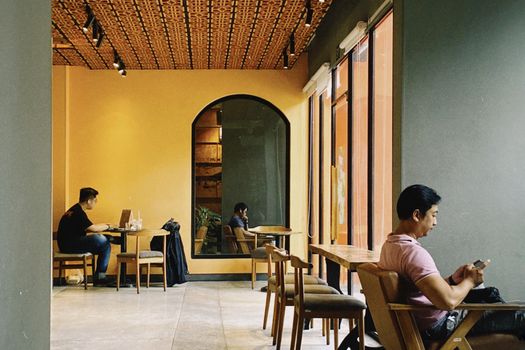
Okkio is the name that keeps coming up. Three branches at 151 Dong Khoi, 120 to 122 Le Loi and the Fine Arts Museum, all at 4.6 stars. A five-star review from 5 September 2026 has staff explaining the different beans, and one from 25 August says they will grind a bag to take home. The Dong Khoi balcony looks at the Opera House.
There are two catches.
First, price. A five-star Google Maps review, Korean, translated, 25 September 2026, prices the americano at 60,000 dong, about $2.33. It adds that the entrance is genuinely hard to find: into the alley where they sell painting cases, turn right, up one flight of stairs.
A three-star Vietnamese review from 7 August 2026 at the Le Loi branch is blunter. It reads: "prices are high and they have just raised them again, and the cafe does not help with bike parking."
Second, parking. A four-star Google Maps review, Vietnamese, translated, 15 August 2026, explains the line item no menu carries. It reads: "the cafe has no bike parking of its own, so you park at the lots around it. Parking is about 10,000 to 20,000 dong."
That is up to a third again on top of a 60,000 dong coffee, and the same reviewer found the milk coffee merely fine. The ceiling sits well above the americano: a four-star Google Maps review, Japanese original, 19 July 2026 paid 95,000 dong for an Ethiopian hand drip at Dong Khoi and 75,000 for an almond croissant, with each bean's origin and processing written up on the menu. The Fine Arts Museum branch carries a discount nobody prints. A five-star Google Maps review, Vietnamese, translated, 11 June 2026 puts museum admission at 40,000 dong, or 30,000 with a drink from the cafe, while a one-star review from 17 July 2026 puts the cheapest drink there at 45,000 and makes the Cheo Leo complaint again: Western customers get greeted, Vietnamese ones do not. Budget 70,000 to 80,000 dong all in for an americano once parking is counted, which is $2.72 to $3.11.
Should you buy weasel coffee?
No, not from a souvenir shop. Real civet coffee is produced in tiny quantities, and the volume on sale to tourists here is unlikely to match the label at the price asked.
Carry home whole beans instead, from a roaster who will name the province and the farm. The specialty bars above will grind to your brewer. Your own country's customs rules on food imports apply, not Vietnam's.
Is the ice in your ca phe sua da safe?
Usually yes in cafes and established stalls. Their ice is commercially made and arrives as cylinders with a hole through the middle.
The CDC's Vietnam destination page tells travellers to eat and drink safely. Its food and drink guidance says not to use ice where there is any concern about the drinking water, because it was likely made with tap water. The UK's Vietnam travel health advice, updated 21 September 2026, points travellers to TravelHealthPro before departure.
In practice, if ice arrives as irregular chips from a cool box at a roadside stand and your stomach is already unhappy, order your coffee hot.
Where should you drink, if you only have three days?
Follow these three mornings and you will have tasted the whole ladder for 106,000 to 135,000 dong in total, about $4.12 to $5.24:
- Morning one, a sock-filter stall before 08:00. Black or milk, 18,000 to 25,000 dong, on a plastic
stool on the pavement. Ask for less sugar when you order, not after.
- Morning two, a specialty bar in District 1. 60,000 dong for the americano plus 10,000 to 20,000
for parking, so 70,000 to 80,000 dong all in. Ask which province the beans came from, then buy a bag if the answer is specific.
- Morning three, whatever cafe is closest. Order the default ca phe sua da, 18,000 to 30,000 dong.
There are thousands of these cafes, and the third-best one on your street is usually excellent.
Pair the first morning with the city's markets, which open early and sit near the old coffee streets.
Our Ho Chi Minh City guides cover where to stay and how to move around, and the Vietnam section handles practicalities including the e-visa. The national tourism board's Ho Chi Minh City page covers the rest of the city.
Frequently Asked Questions
What is the most famous coffee in Vietnam?
Ca phe sua da, iced coffee with condensed milk. Egg coffee is the better-known novelty abroad, but it is a Hanoi invention. Saigon's signatures are ca phe sua da, bac xiu and increasingly ca phe muoi.
Do you get good coffee in Ho Chi Minh City?
Yes, at both ends. An 18,000 dong cloth-filter coffee from a stall with 1,546 ratings and a 60,000 dong americano are both properly made. What varies is the room and the seating, not the competence behind the counter.
What is so special about Vietnamese coffee?
The bean and the method. Vietnam grows mostly robusta rather than arabica, giving a heavier, more bitter cup. The brewing is slow: a metal phin filter, or a cloth bag in the older shops, dripping over condensed milk. The sweetness is the other half of the recipe.
Is Vietnamese coffee stronger than Starbucks?
By caffeine, generally yes. Robusta carries roughly twice the caffeine of arabica and the serve is concentrated, so a glass a third of the size hits harder than a large Western drip coffee.
Where can I buy authentic Vietnamese coffee?
From a specialty roaster who will name the province and the farm, and grind to your brewer. District 1 bars sell beans over the counter, and a five-star review from 4 September 2026 describes a free espresso sample handed over with the bag. Avoid souvenir-shop weasel coffee, where the quantity on sale is unlikely to match the label.
Is there a good cafe in District 1 without the tourist prices?
Cheaper, yes, but not by much inside the district: a one-star review from 17 July 2026 puts the cheapest drink at the Fine Arts Museum branch at 45,000 dong. The real saving is leaving District 1, where the Cau Kieu sock-filter stall charges 18,000 to 25,000 dong.